

CCIVS, ASTOVOT, AJUDE, and ZWA,
A logo is far more than a simple visual mark. It is the condensed identity of an organization expressed through symbols, colours, and design. Often, a logo creates the very first impression people have of an institution long before they fully understand its mission or activities. In a single image, it quietly communicates values, purpose, history, and character.
Through shapes, colours, and visual elements, logos can suggest whether an organization is innovative, community-oriented, resilient, progressive, or deeply rooted in tradition. In this way, a logo becomes a silent storyteller. It connects perception with meaning and allows people to develop an emotional connection with an organization even before engaging directly with its work.


Within the International Voluntary Service (IVS) movement, several organizations use construction-related imagery in their logos. This article focuses on four organizations in particular: Coordinating Committee for International Voluntary Service (CCIVS), AJUDE, Zimbabwe Workcamps Association, and ASTOVOT. Although each organization has its own identity and context, their logos share a common construction motif that reflects similar values and ideas. This visual similarity also helps explain the long-standing partnerships and solidarity among these organizations within the IVS network.
The construction motif, often represented through the image of a person building a wall or engaged in construction work, carries profound symbolic meaning. Beyond the literal act of building, it represents the idea of building a better future. Construction, in this sense, symbolizes hope, renewal, cooperation, and collective responsibility. To build is not only to respond to present needs, but also to prepare for the generations that will come after us.
These motifs can also be understood within their historical context. CCIVS, emerged or grew in influence during the years following the Second World War in the late 1940s. At that time, many communities across the world faced destruction, displacement, and the urgent need to rebuild homes, institutions, and social structures that had been damaged by war. Construction was therefore not merely physical labour, it became a symbol of recovery, peacebuilding, solidarity, and human resilience.
The founders and early volunteers of IVS movements understood that rebuilding society required collective effort and international cooperation. The construction imagery in the logo reflects that spirit. It represents people coming together to restore dignity, rebuild communities, and create sustainable futures. In many ways, these logos preserve the memory of those historical struggles and aspirations.
What makes these construction motifs especially meaningful is their connection to the principle of sustainability, which remains central to IVS activities today. The idea of “building for the future” aligns closely with the philosophy of meeting present needs while remaining mindful of future generations. The logos therefore do not only represent physical construction, they also symbolize the construction of peace, intercultural understanding, social justice, environmental responsibility, and global solidarity.
For this reason, the construction motifs found in the logos of ZWA, AJUDE, CCIVS, and ASTOVOT can be understood as powerful metaphors. They carry multiple layers of meaning that extend beyond their visual appearance. They tell stories of history, struggle, cooperation, sustainability, and hope. Through a simple image of construction work, these organizations communicate a vision of humanity working together to create a stronger, more peaceful, and more sustainable world.
Transformation in Design, Continuity in Values and Mission
Although the logos of The Coordinating Committee for International Voluntary Service and Zimbabwe Workcamps Association have evolved over time, both organizations deliberately retained the construction motif within their visual identity. This continuity is deeply significant. It reflects that, despite changes in design and modern trends, the core values, mission, and identity of these organizations have remained unchanged. Their logos may have adapted visually to contemporary times, but the message behind them continues to stand firm.
This persistence symbolizes resilience and commitment. In a rapidly changing world shaped by technological advancement, economic transformation, shifting social structures, and globalization, many institutions are forced to redefine themselves constantly. Yet these IVS organizations remain grounded in their founding principles. Their continued use of the construction motif demonstrates that their commitment to solidarity, community development, peacebuilding, and sustainability remains unshaken.
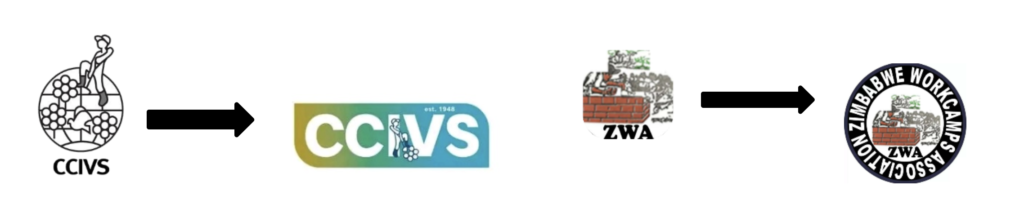
More importantly, these logos remind us that sustainability is not merely a modern concept or a passing global trend, it is a necessary foundation for the future of humanity. Regardless of how much the world changes, the responsibility to build sustainably and think beyond the present generation remains essential. The construction imagery therefore carries a timeless message, every action taken today contributes to shaping the future.
Drawing from the metaphorical meaning of the construction motif, one can understand these logos as a powerful call for responsibility and conscious action. The act of construction in these symbols goes beyond building physical structures. It represents the building of societies, relationships, peace, opportunities, and sustainable futures. By preserving this imagery as part of their identity, these organizations communicate that true development requires patience, collective effort, and long-term vision.
In this sense, these logos become more than organizational symbols, they become reminders to humanity itself. They challenge individuals, communities, and institutions to reflect on the impact of their actions today and to consider the wellbeing of future generations. The construction motif therefore stands as a visual philosophy of responsibility, continuity, hope, and sustainable human development.
By Ian Tawanda Mugowa
CCIVS Youth Committee Member
ZWA Researcher & Innovation Youth Officer
Director WaMambo Explorer