
From 10–13 September 2026, CCIVS was invited to take part in the SCI Asia Peace Regional Forum 2026, hosted by IVP Indonesia in Bogor, Indonesia. Representing CCIVS, Youth Action Officer Hani Nurlina joined the Forum as a speaker and observer.
The Asia Peace Regional Forum is an annual regional gathering organised by Service Civil International (SCI), one of CCIVS’ member network organisations. It brings together SCI branches, groups, partner organisations and volunteers from across the Asia-Pacific region to exchange experiences, reflect on common challenges and explore ways to strengthen cooperation around volunteering for peace.
This year’s Forum was held in a hybrid format, bringing together representatives from SCI Malaysia, SCI Hong Kong, SCI Nepal, SCI Sri Lanka, SCI India, IVP Australia, IVP Indonesia and Bhumi Horta Foundation, alongside other participants joining online.
Understanding peace through volunteering
The Forum opened with an orientation session and a Peace Messenger Workshop, introducing participants to the idea of “Volunteering for Peace” and inviting them to look at peace beyond the absence of conflict.
The discussions explored different dimensions of peace, including inner peace, peace with others, social and political peace, and peace with nature. It was a useful starting point for the days that followed, especially as participants reflected on how volunteering can contribute to peace in different contexts across the region.
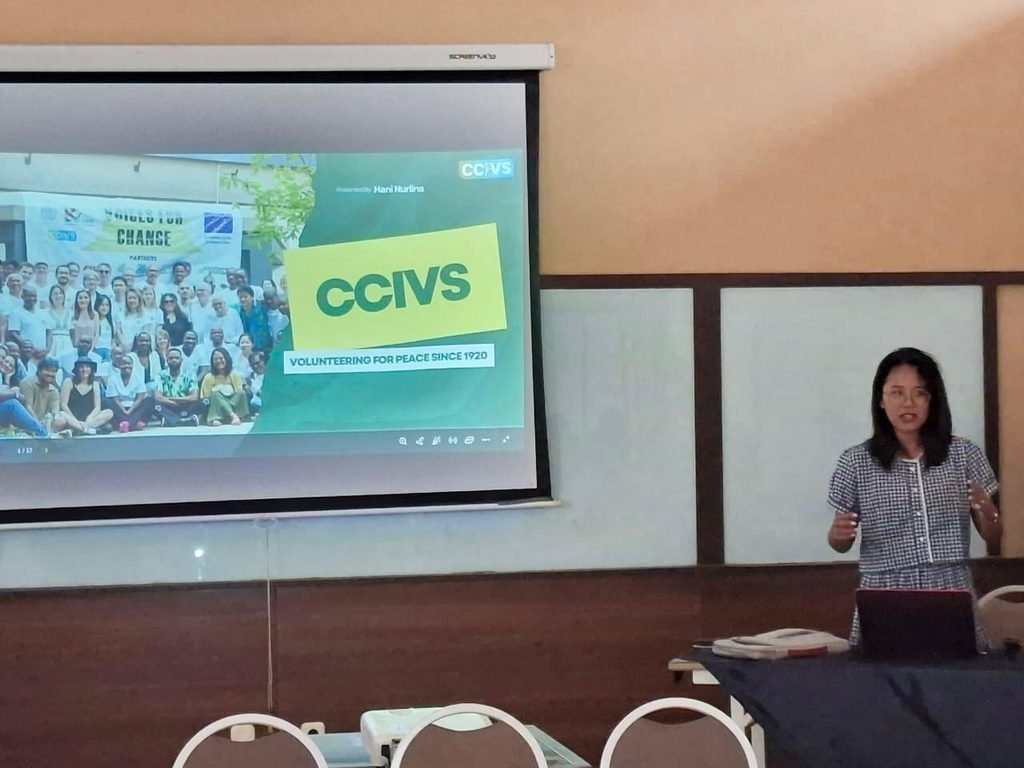
CCIVS then joined the programme to introduce its role as an umbrella organisation within the International Voluntary Service movement. The session also shared updates on ongoing CCIVS projects and initiatives, while opening a discussion on how organisations within the wider IVS network can collaborate more closely.
The session was followed by an update from Dr. Shobha, a member of the SCI International Executive Committee, on internal organisational developments. The day concluded with a session on organisational management led by guest speaker Wisnu Tri Hanggoro, former Programme Manager at the Southeast Asian Press Alliance (SEAPA) and Coordinator at USAID, Tifa Foundation.
Why do voluntary organisations matter?
One of the questions raised during Wisnu’s presentation stayed with the group:
“Why do we need voluntary organisations?”
The question was particularly relevant in a Forum centred on peace and volunteering. The presentation highlighted the challenges facing many communities across Asia, drawing on the Global Peace Index 2026 and its three main areas of measurement: societal safety and security, ongoing domestic and international conflict, and militarisation.
The discussion also pointed to situations where governments alone cannot address all the consequences of conflict and crisis, including deaths and injuries, displacement and poverty. This is where civil society and voluntary organisations can play an important role by responding to needs and filling gaps within communities.
Examples from across the region were also discussed, including the decline in peacefulness in Myanmar, the conflict in Mindanao, and situations in Papua and post-conflict Aceh in Indonesia.
But the conversation did not stop at why voluntary organisations are needed. It also turned towards a more difficult question: what makes them sustainable?
Keeping organisations sustainable without losing their purpose
Participants were invited to reflect on why non-profit and voluntary organisations sometimes struggle or fail. The issue, as discussed during the session, is not always a weak mission. In many cases, organisations can face operational challenges that gradually affect their ability to continue their work.
Five key areas were highlighted:
- Funding
- Burnout
- Systems
- Deviation from the original mission
- Unclear impact or a lack of connection to people’s everyday lives
For volunteer organisations, this balance can be particularly important. Volunteers are often motivated by values and a desire to contribute, rather than financial incentives. At the same time, having a strong mission does not remove the need for good management, clear systems and sustainable resources.
The discussion also brought attention to the importance of local values and knowledge. Examples such as gotong royong in Indonesia, which reflects mutual assistance and collective action, and bayanihan in the Philippines, which represents community unity, show how volunteering can be deeply connected to local culture.
These values can give volunteering its meaning and strength. The challenge is to keep that spirit alive while also building organisations that are well managed and able to create tangible impact.
Strengthening the Asia-Pacific IVS network
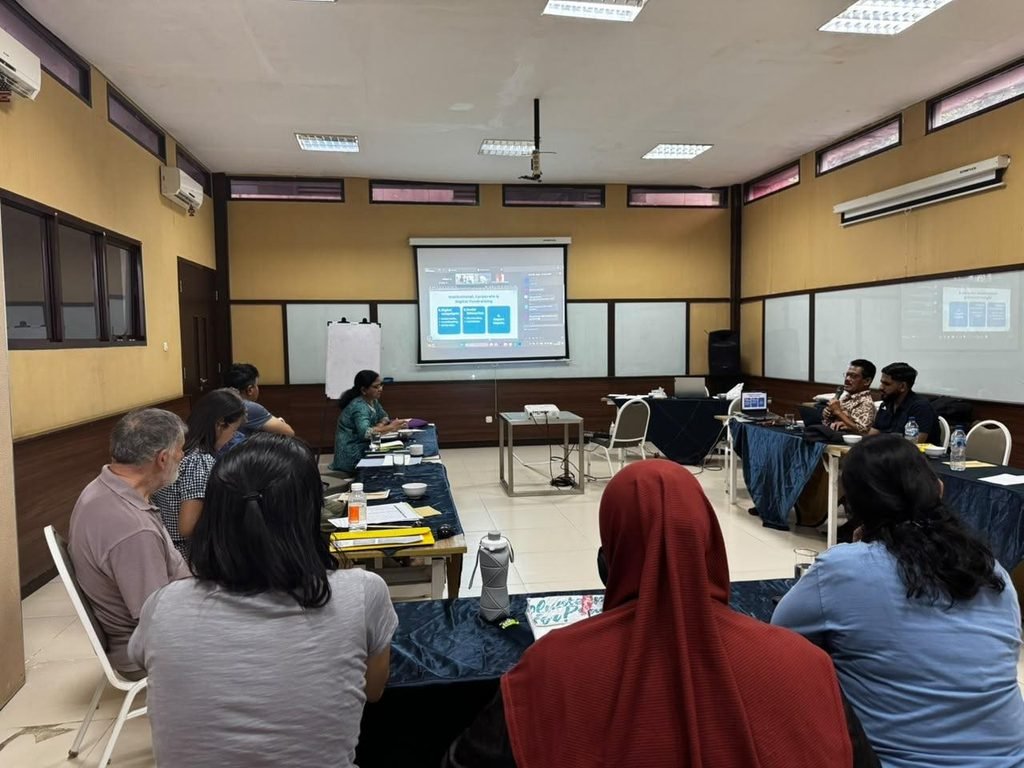
On the second day, the Forum moved from broader reflection towards regional cooperation and planning. Participants took part in discussions and technical meetings focusing on the IDEA Working Group, the Asia Liaison Office, regional development and the future direction of the Asia Peace Region.
The IDEA (International Development and Exchange in and with Asia) Working Group is a regional working group within SCI that connects branches and groups operating under the SCI International Secretariat. Its work is supported by the Asia Liaison Office, with K. Nuwan Madusanka serving as Asia Liaison Officer and helping connect SCI’s Asian branches with the International Secretariat.
A significant part of the discussion focused on listening to the different challenges faced by SCI branches and groups across the Asia-Pacific region. From there, participants explored how the network could work more closely together, strengthen regional cooperation and expand opportunities for volunteer exchanges.
For CCIVS, being part of these conversations was also an opportunity to better understand the realities and priorities of its member organisations in the region. It reinforced the importance of creating spaces where organisations can exchange experiences, identify common challenges and find opportunities to collaborate beyond individual projects.
Beyond the meeting room
While the Forum included many strategic and technical discussions, there was also time for participants to connect informally.
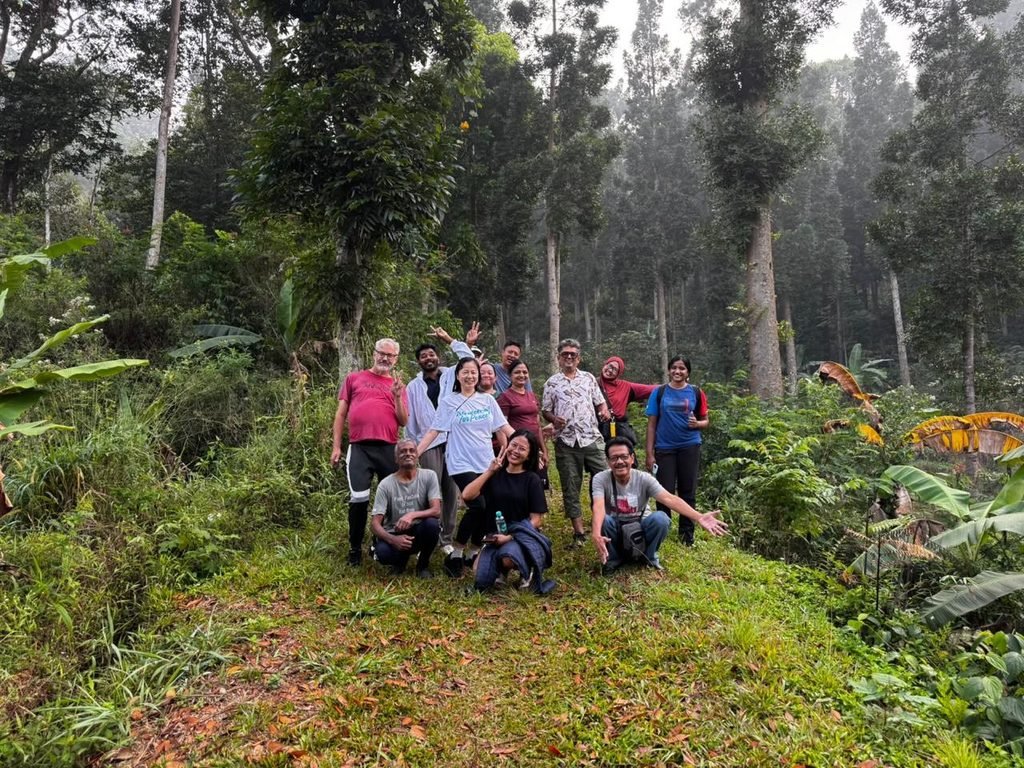
A guided trek through the surrounding natural areas offered a chance to experience Bogor together outside the meeting room. Other activities, including yoga and karaoke, created more relaxed spaces for participants to get to know each other and strengthen relationships across organisations and countries.
These informal moments were a reminder that regional networks are built not only through meetings and workplans, but also through the relationships between the people involved.
Continuing the conversation
The SCI Asia Peace Regional Forum 2026 provided a space to look at volunteering from several perspectives: peacebuilding, organisational sustainability, regional cooperation and the role of civil society in responding to challenges across Asia.
For CCIVS, the Forum was also an opportunity to reconnect with member organisations, share what is happening within the wider IVS movement and explore how different parts of the network can work together.
The discussions in Bogor showed that “Volunteering for Peace” is not a single activity or project. It is an ongoing process of building connections, supporting communities, creating spaces for people to participate and finding practical ways to respond to challenges together.
As the Asia-Pacific IVS network continues to develop, these conversations can help create stronger links between organisations and open new possibilities for cooperation, exchange and collective action.